


Storytelling and Agile have been borrowing from each other for years. Here’s a practical guide to using it on every sprint, with every audience, and without sounding like you’ve read too many books about it.
You’re already a storyteller. You just don’t know it yet
I’m a big fan of pub quizzes (not to brag, but my team is really good – Go Llamas!), so here’s a pop quiz for you: what do Lord of the Rings, a Marvel movie, and your team’s last sprint planning meeting have in common?
If you answered “a hero goes on a quest” – congratulations, you’re already doing storytelling. You just might not know it yet.
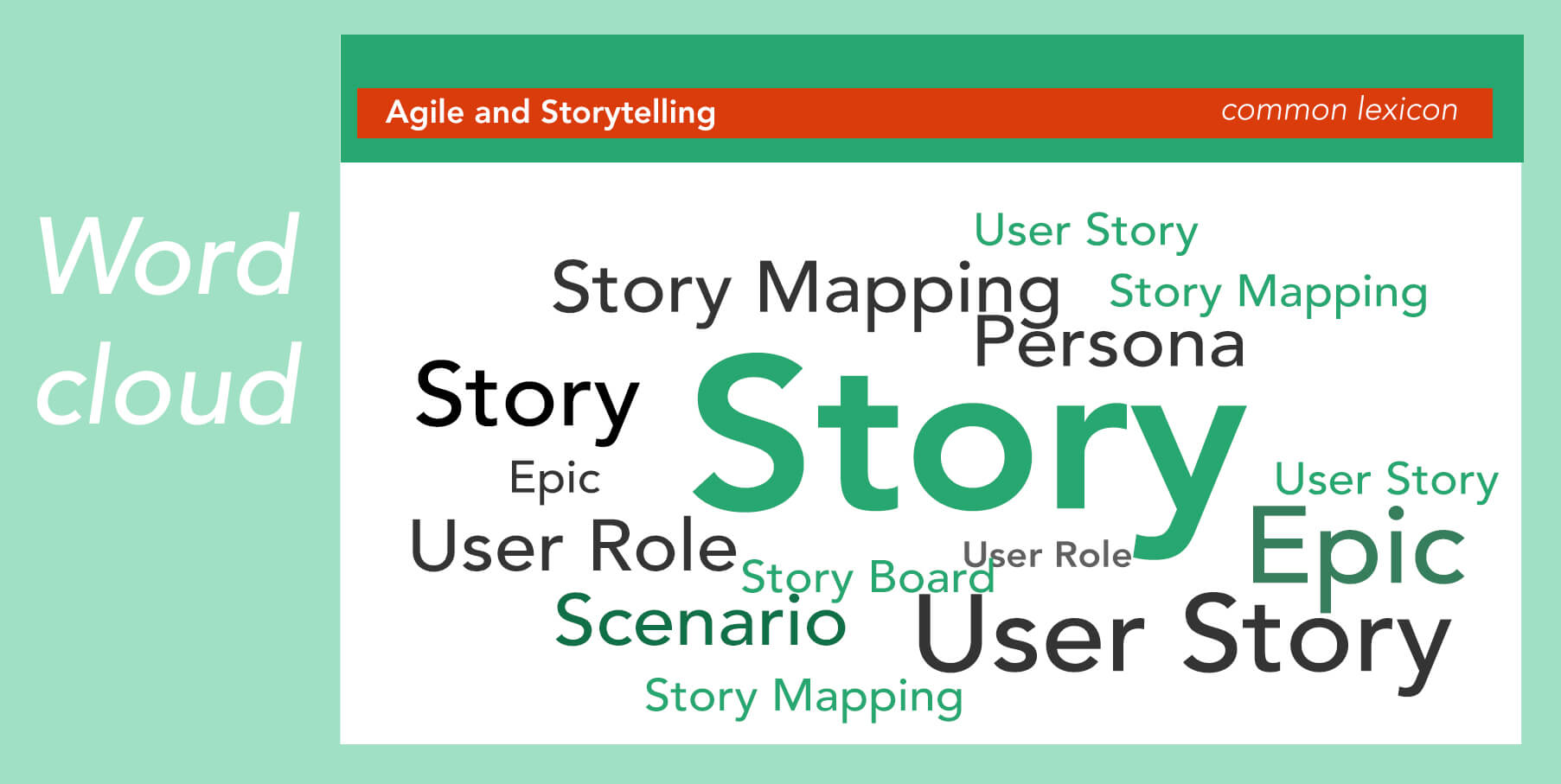
Take a quick look around your daily work. You write user stories. You estimate story points. You map journeys, come up with scenarios, group things into epics. By the time you ship a feature, you’re writing release notes, telling people what it does and why it matters.
Every single one of those activities has been borrowed, more or less directly, from the craft of telling a good story.
And yet, whenever I bring up the word storytelling in a tech context, the most common reaction is a polite-but-firm look that says: “That’s very interesting, Diana, but we have a release this week.”
Fair enough. So let me make my case quickly.
Why Storytelling Works
Good storytelling is one of the most underrated tools you have in software development – not only because it makes your release notes prettier, but more importantly because it changes two things at once. It changes how your users feel about the product and it changes how your team feels about building it.
When it works, it motivates, captivates, and inspires. Storytelling has this gift. When it doesn’t, you get a backlog full of features nobody really wanted, built by people who couldn’t quite tell you why they were building them and what’s next. They just wanted to check things off as “Done”.
So here’s the point I’d like to get across: a product is a story, and the user is always the hero. Not you, your product, or your business. I hear this a lot in tech marketing: “our product does [this]”; “our company did [that]”; “funded by [this guy]”. nObOdy CaReS.
What to do instead? Focus on the user. The user is the main character. That’s where the spotlight should shine: on the user, not the product. Everything good flows from getting that one casting decision right.
The next question, of course, is how to actually use this insight in your day-to-day work. So let’s split it into two parts: how to use storytelling in Agile, and when to use it.
Part 1. How to Use Storytelling in Agile: the Seven Cs
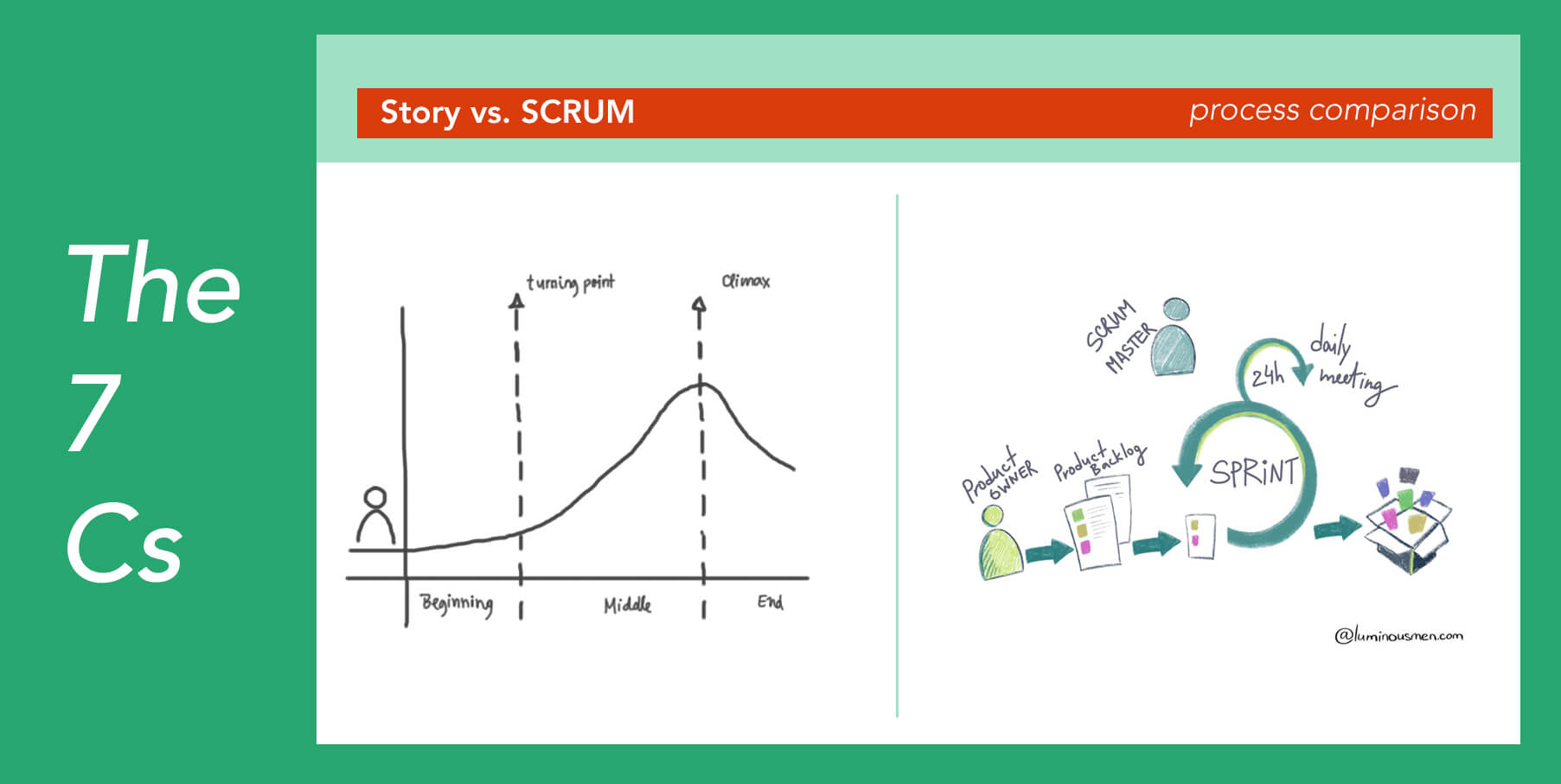
Most classic frameworks of storytelling agree on a handful of moving pieces that fit together like a 3D puzzle. I put them together into a list of keywords starting with the letter C, because they’re easy to remember and they map onto an Agile workflow almost perfectly: context, character, conflict, climax, conclusion, connection, and complexity.
Here they are, one by one, with a tech-product translation for each.
1. Context – Set the Stage
Every story starts somewhere. Before you can tell yours, you have to know who you’re telling it to and why they should care.
In the development cycle, this is the part where you create a product story and answer two questions before committing a single line of code: Who am I building this product for? And why should they pay any attention to it? If you can’t answer those, no amount of clever code or beautiful UI is going to save the day. You’ll be telling a great story in an empty theatre.
2. Character – Meet Your Hero
In any story worth reading, there’s a main character we care about. In your product, that character is your user persona. Here’s an example of user persona from a software product for project managers:
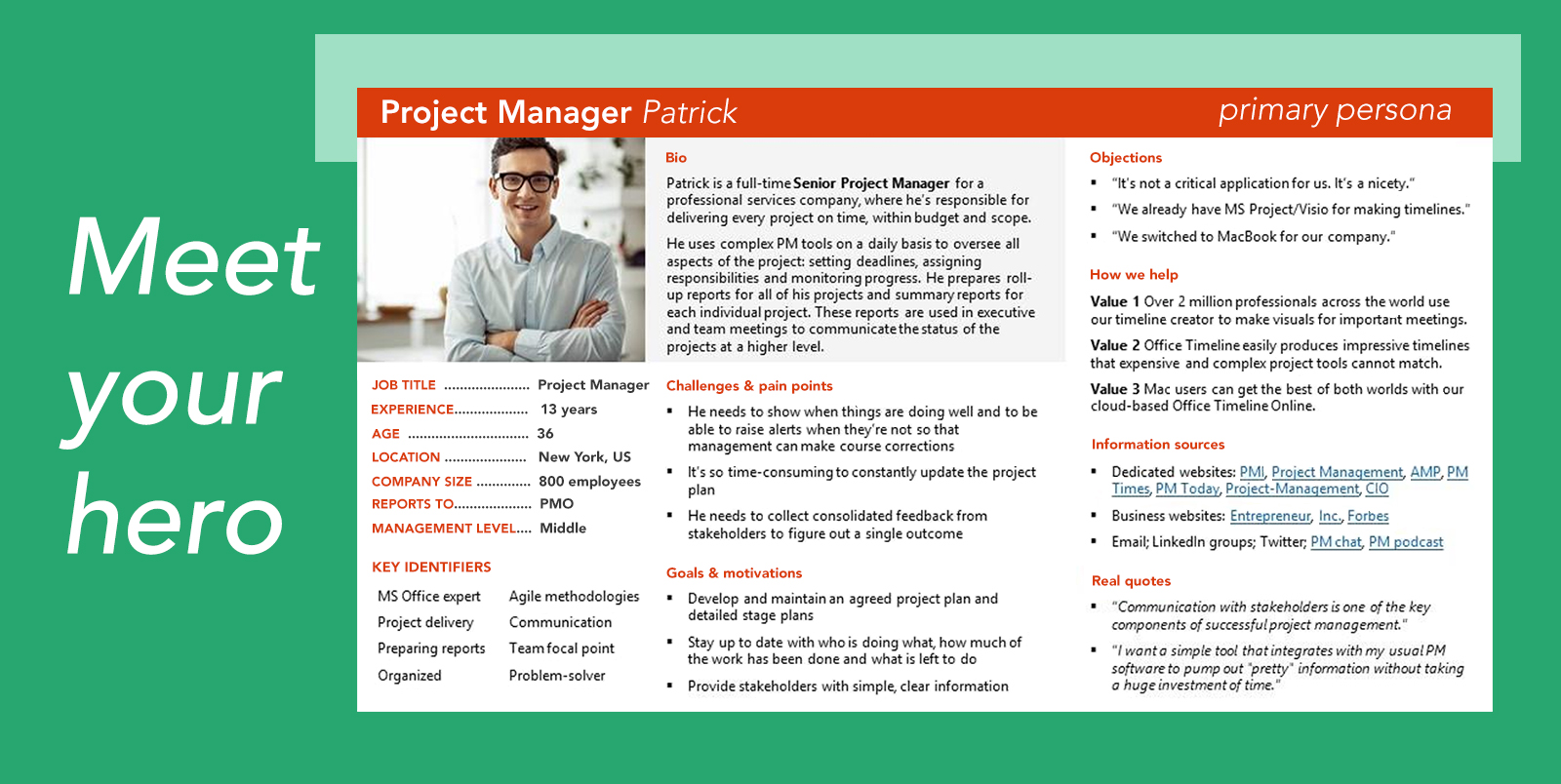
But a persona is more than just a name and a stock photo at the top of a Confluence page; it’s a way of forcing yourself to keep asking why. Why does this person need my product? Why does this particular feature matter to them? What is the motivation behind the request?
Behind every persona, there’s a real person with frustrations, motivations, and reasons for clicking (or not clicking) on whatever you’ve just built. Get curious and get data about that person. Your roadmap will make more sense once you do.
3. Conflict – the Problem to Solve
If there’s no conflict, there’s no story. Nobody wants to read a novel where a character wakes up, has a perfect day, and then goes back to sleep. The same is true of products: if there’s no problem to solve, there’s no reason to ship.
This is where you define the user problem. What does your user want? Why do they want it? What is their pain point? Spell it out clearly, in human language, before you start designing the solution.
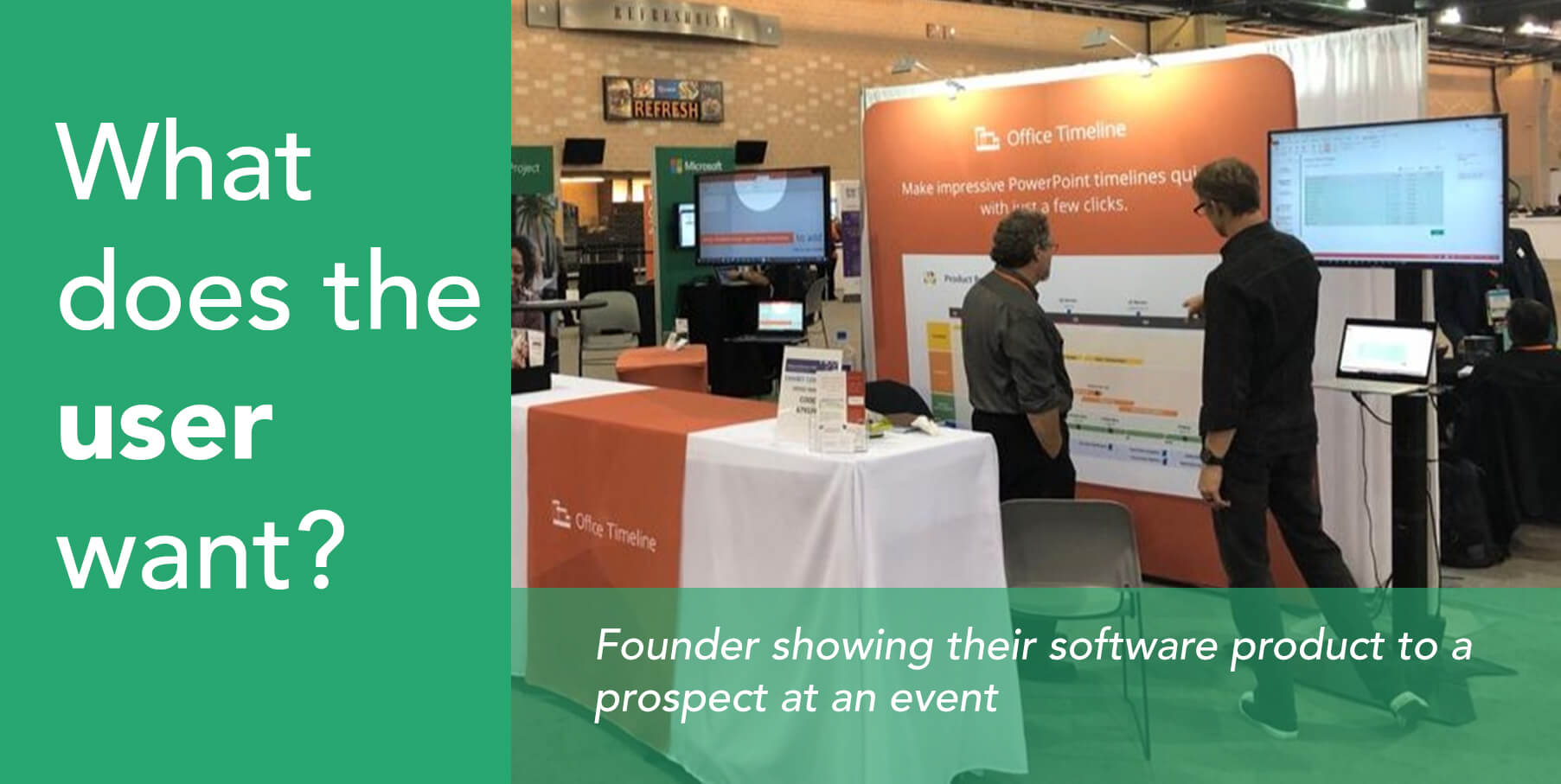
Because “leadership wants a button here” and “users are losing twenty minutes and all their patience every Monday morning trying to find their weekly tasks” are two completely different briefs, and one of them is going to produce a much better product than the other.
4. Climax [or Rising Action] – the User Story
Now we get to the part of the story where the plot starts moving. In Agile, this is the user story and it’s a beautiful little narrative device, when you really look at it. The name says it all: “User. Story”.
The classic format is “persona + need + purpose”: As [user], I want [something] so that [outcome]. Three small ingredients, but together they tell the team three big things at once: what we are building, why we are building this, and what value it creates. It’s a complete short story in a single sentence.
Here’s an example from the backlog of a software product that creates project timelines:
| Title: Customize colors |
| As Project Manager Patrick, I want to change the default color of any task or milestone on my timeline, so that I can style my timeline the way I want to. |
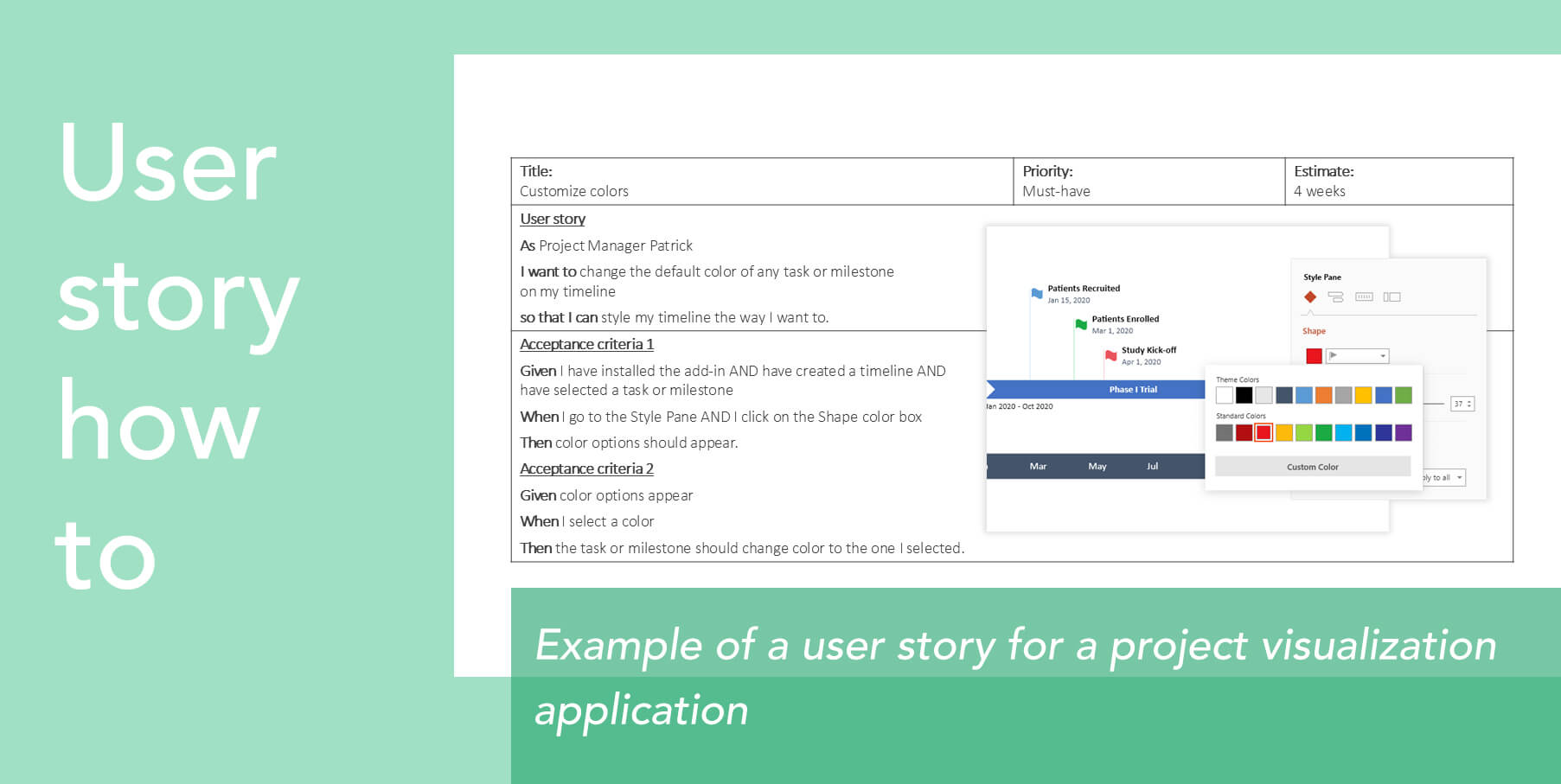
In one sentence, the team knows who they’re building for (Patrick, the busy PM), what he needs (color control), and why it matters (personal style, presentation quality, brand consistency). Suddenly “Customize colors” stops being a line in a Jira ticket and starts being a small win on Patrick’s working day.
5. Conclusion – the Demo
Every story has a moment when the tension finally breaks. In software development, that’s your demo.
The golden rule here is the same one good novelists swear by: show, don’t tell. Don’t just read out a feature list. Don’t just walk through the spec. Instead, demonstrate the impact. Show what changes for the user. Show how their day is better, faster, less painful. Show how you solved the problem you set out to solve in step three.
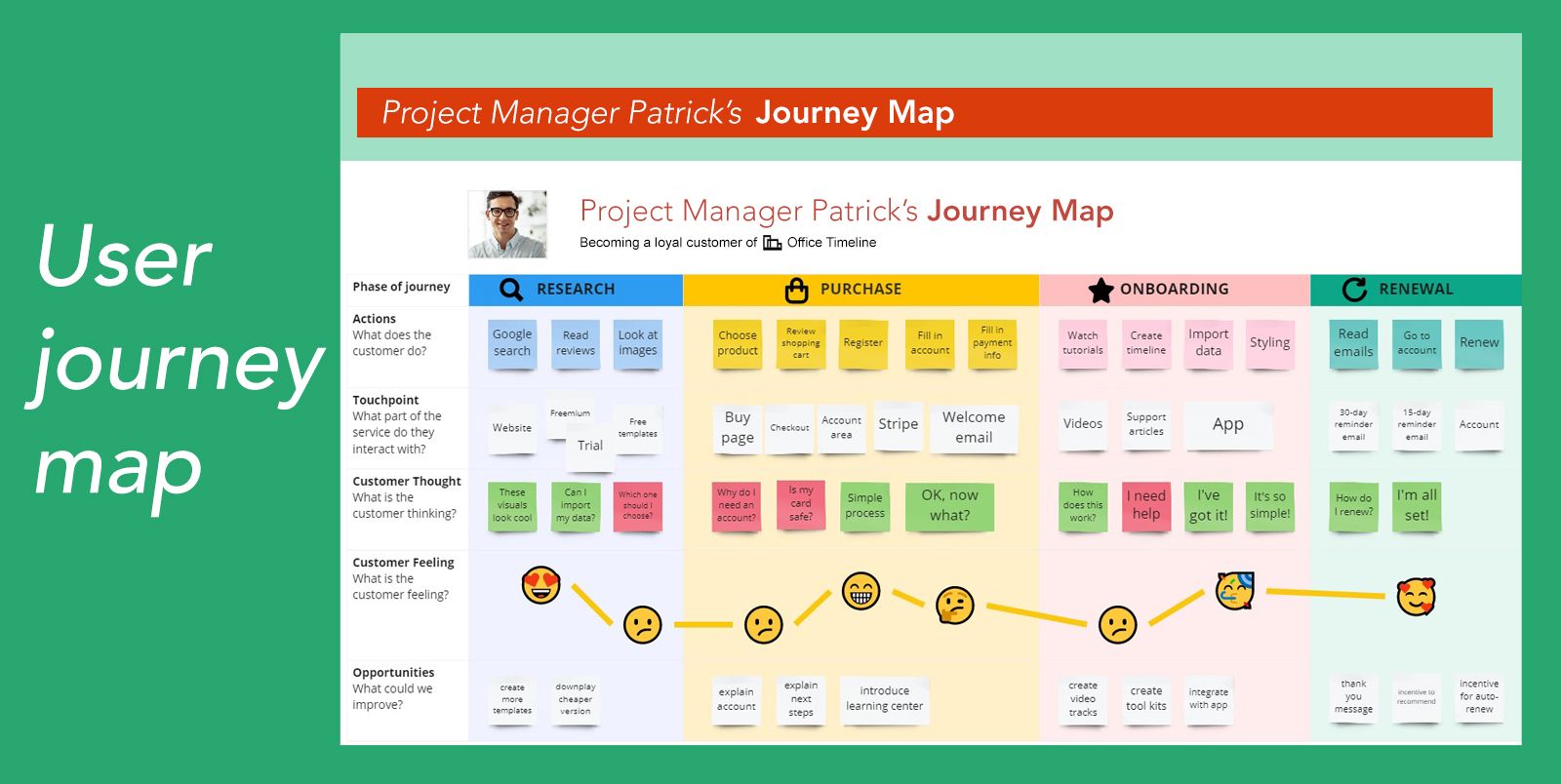
A full demo should always show the user journey from problem to solution, not just dump the solution on the audience and hope they can reverse-engineer to figure out the problem it was meant to solve.
Here’s an example of a journey map for the user of a software product:
6. Connection – the Emotional Payoff
I know people in IT don’t talk about feelings often, and it’s a part most product teams brush aside. But the best stories don’t just inform you, they make you feel something. So should your product.
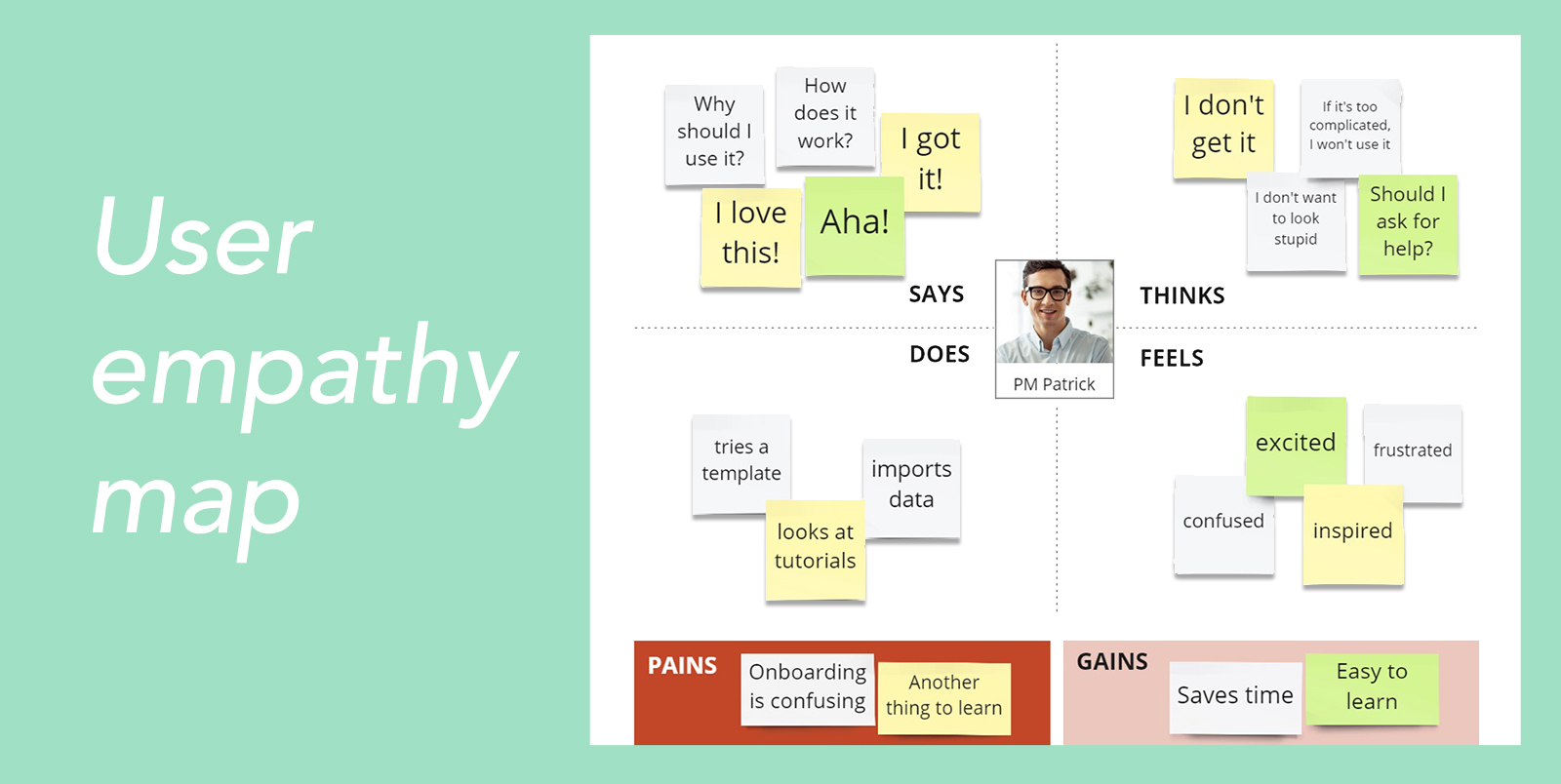
This is where a tool like the empathy map comes in handy. What can your product actually do for each of your user personas? More importantly, how will using it make them feel? Less stressed? More confident? Like a wizard who can produce a beautifully formatted project timeline in three minutes flat?
That feeling is your value proposition. The features are just the mechanism by which it’s delivered.
7. Complexity – Stories, Epics, and the Bigger Quest
No good story is just one scene. There’s an arc, a build, a bigger picture. The same is true in Agile.
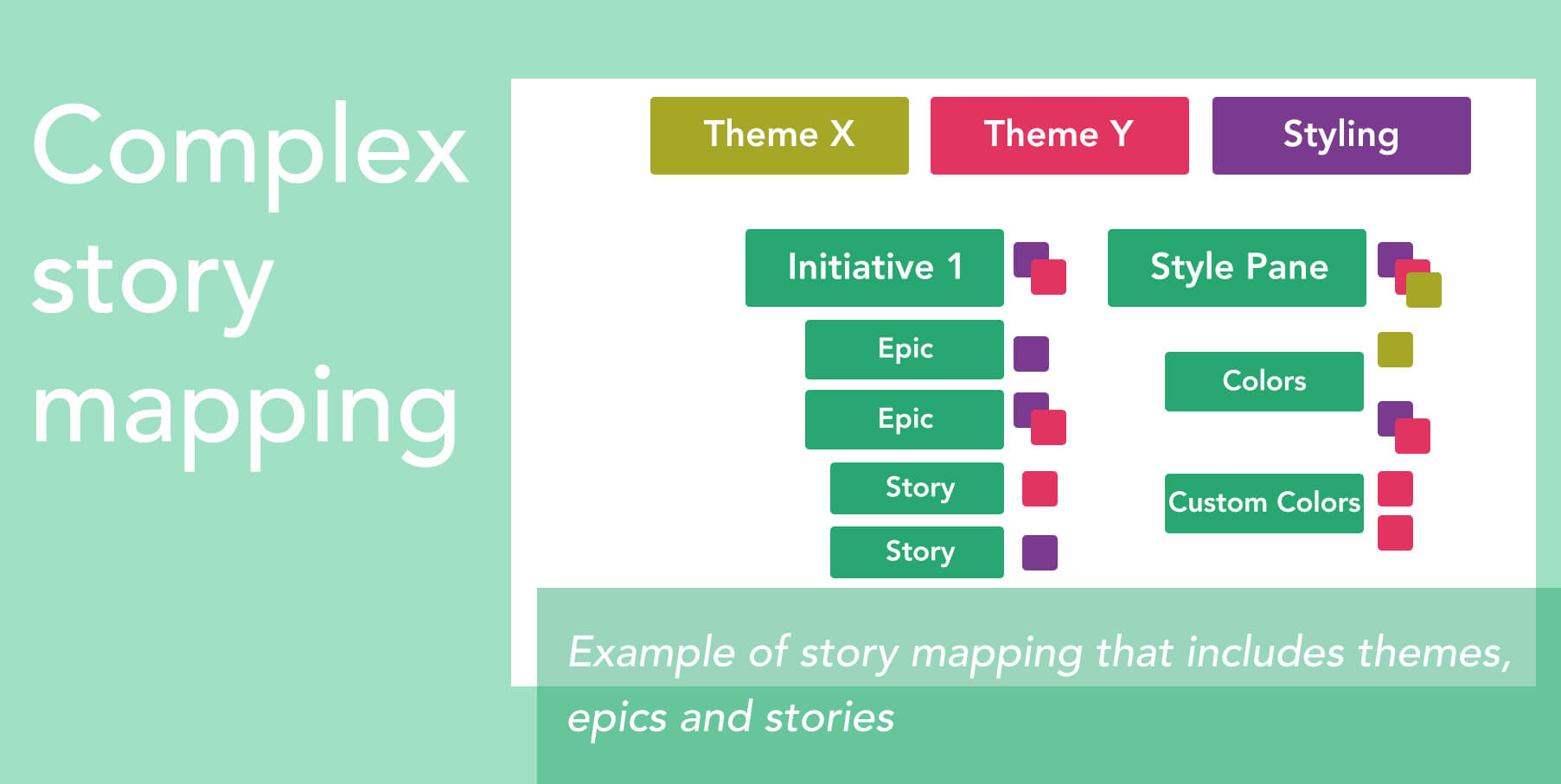
A story tells the arc of a single piece of completed work. An epic zooms out and shows you the high-level objective that ties many stories together. A theme zooms out further still. Stacked properly, they describe more than just a boring backlog; they describe the overall quest of your product. The big story. The thing you’re really trying to accomplish here.
When your team can see how a tiny ticket about a color picker fits inside the bigger quest of “help project managers communicate clearly with their stakeholders”, they are more motivated to write better code. They write code that belongs somewhere.
Part 2. When to Use Storytelling: Know Who’s Listening
Knowing the shape of a good story is only half the work. The other half is knowing who you’re telling it to. In a typical product cycle, you’re really speaking to three audiences, and each one needs a slightly different version of the same story.
Executive Stakeholders
When you present your progress, resist the temptation to roll out a slide of features, strategies, and specs. Executives don’t fall in love with bullet points. They fall in love with transformations. With stories.
How will your product change someone else’s life – personally, professionally, financially? What’s different in the world after this feature ships? Lead with that, and the roadmap details will land much better. Emotions drive action, especially in boardrooms.
Your Internal Team
This is the audience I think about most, and that’s the reason why I advocated including a session about product story in the induction training for new hires. Your internal team needs a story too – not the same one your users get, but a story all the same.
Why should they care about this product? Why should they invest their time, their attention, and, let’s be honest, their brainpower into building this specific feature instead of any of the other things they could be doing?
Sprints work better when the people in them feel like they’re working on something, not just through something. Developing a product should be more than just a job. Storytelling is how you make it more, how you give their job a meaning.
Your Users
Finally, the people you’re really doing all this for. When you talk to your users – on your website, in your onboarding flow, in your emails, in your support docs – always keep these four elements in mind:
- Who is the hero? Always the user. Not you. Not your product. Not your business.
- Who is the villain? Whatever is preventing your users from achieving their goals. Maybe it’s a clunky old tool, maybe it’s wasted time, maybe it’s a manager waiting on a report.
- What is the goal? Whatever your user actually needs – said in their words, not yours.
- Who is the guide? Your product. The wise mentor that helps the hero get where they’re trying to go.
Get those four things right, and you’ll find that the story almost writes itself. Get them wrong, and you’ll end up sounding like every other SaaS company on the internet: a hero in desperate search for an audience, fighting (and failing) to catch a scrap of attention.
One More Thing
If there’s a single line I’d want you to take away from all of this, it’s the one I opened with: a product is a story, and the user is the hero. Everything else – the personas, the user stories, the demos, the empathy maps – is just craft in the service of that one idea.
Good storytelling won’t write your code for you. It won’t run your sprints. It won’t ship your release on a Thursday (and no, we don’t do releases on Fridays!). But it will make everyone fall a little bit more in love with your product: your team, your stakeholders, and, if you do it right, your users.
And frankly my dear, that’s the kind of story where you do give a damn.