


How a single laboratory management contract in 2001 grew into a 25-year strategic partnership, with RomSoft becoming Sysmex Europe’s main external engineering center across 20+ products and multiple software domains.
Sections in this article:
The Context | Why RomSoft | How the Collaboration Works | Partnership Timeline | What We Built Together | Partnership Outcomes | What We Learned
Partnership at a Glance
| Duration | 25 years, ongoing |
| Partner | Sysmex Europe SE |
| Headquarters | Hamburg, Germany |
| Parent company | Sysmex Corporation, Japan |
| Industry | Laboratory diagnostics |
| Partnership started | 2001 |
| RomSoft team | 40+ engineers |
| Products delivered | 20+ distinct applications |
The Context
Sysmex Corporation is a Japanese company and the global leader in hematology diagnostics – the instruments and software that run blood analysis in hospitals and laboratories worldwide. Their European subsidiary, Sysmex Europe SE, is based in Hamburg, Germany, and serves clinical laboratories across the EMEA region.
In the early 2000s, Sysmex Europe’s business was built mainly around analyzers and reagents, but for its laboratory customers, the software running those analyzers was becoming just as important. That software had been designed in Japan, and European labs organized their daily work differently: they wanted simpler screens and workflows that matched their own routines. To close that gap, Sysmex Europe needed a software engineering partner close to the European market, able to build around how its customers actually worked.
The key constraint Medical laboratory software is highly regulated. Any engineering partner had to understand not just how to write good code, but how to operate in a regulated environment – rigorous documentation, validation processes, and quality standards that directly affect patient safety. |
Why RomSoft
RomSoft was founded in December 2001 in Iasi, Romania. Roughly around the same time, the partnership with Sysmex began. The founding team brought experience in complex software systems and a clear mission: build software that makes a difference in people’s lives. Medical laboratory software, where accuracy directly affects diagnosis, was exactly that kind of work.
The first project, K-Expert, a work area manager for medical laboratories, was our chance to prove we could deliver. The team spent a lot of time on-site in Sysmex Europe’s labs, observing technicians through their daily routine and building the software around what they saw, not only around specifications. Some moments stayed with the team, like connecting the software to an analyzer for the first time and waiting for the first results to come through. Up close, a laboratory turned out to be a dense network of devices, people, and rules, and the software had to respect all of them.
From the team K-Expert set the standards that later Sysmex projects built on: requirements clarified before any code was written, documentation that would still be useful years later, and testing thorough enough to catch problems before release. The process worked well enough that Sysmex adopted it and developed it further in its own technical department. |
How the Collaboration Works
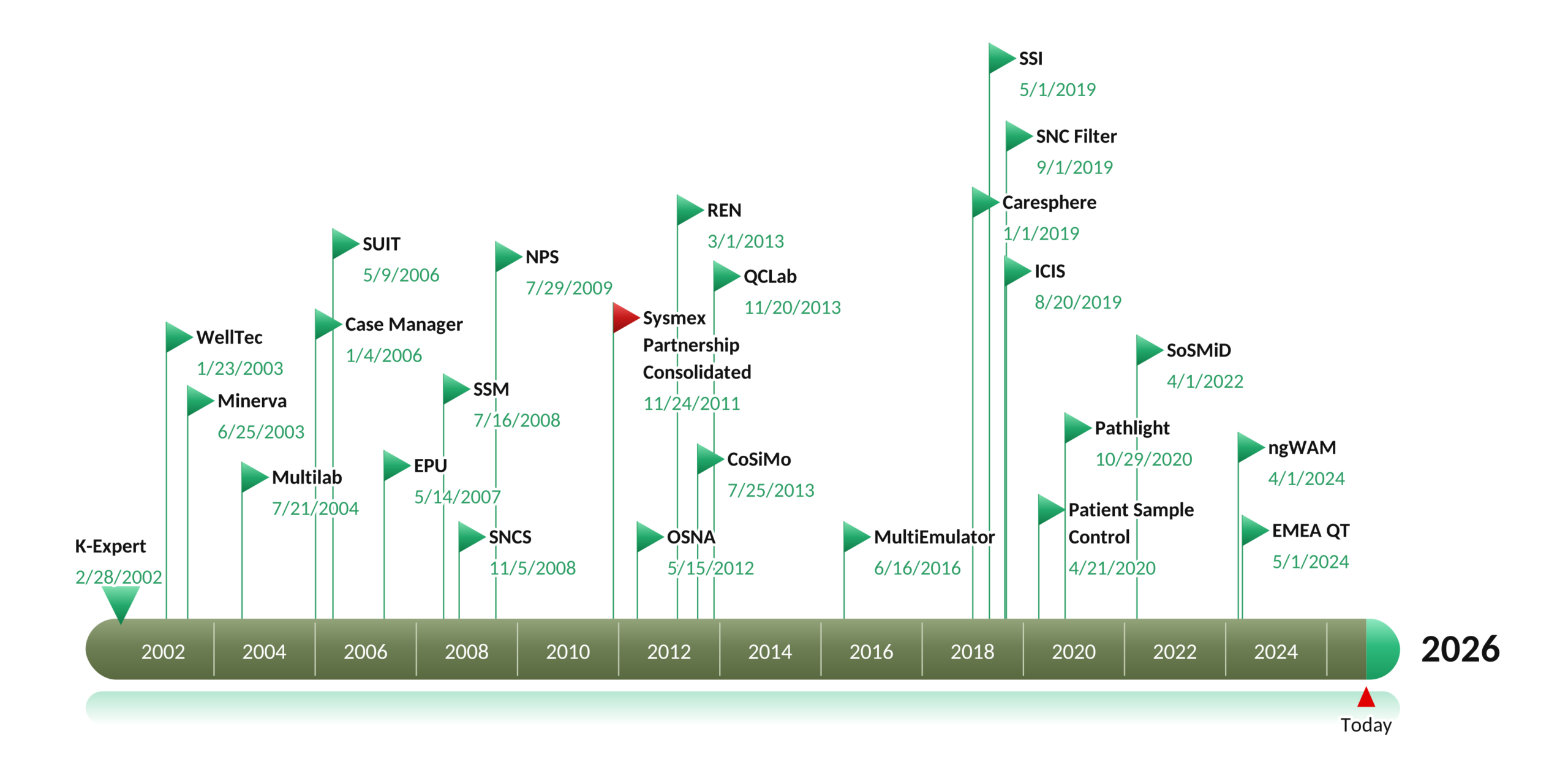
Two milestones shaped the collaboration. In 2005, following the Regional Initiative meeting in Hamburg, RomSoft was established as Sysmex Europe’s external R&D center. In 2011, the two companies signed the Consolidated Partnership Framework, a multi-year framework agreement, where project-specific details are reviewed yearly.
To learn more about how the partnership began, read The beginning of a great partnership.
| Our approach We work as embedded engineering partners – not just project vendors. Our teams are senior, stable, and domain aware. They become a genuine extension of your product and engineering functions. Our commitment is long. Your IP stays yours. |
In practice, our engineers follow the same development process and toolchain as Sysmex’s own teams, and they take part in release planning and architecture discussions, not only in implementation. Team sizes vary as one project moves into maintenance while another is just starting, but this doesn’t change how the two sides work together.
What Makes This Work Long-term
On the Sysmex products, knowledge doesn’t reset between projects. Technical documentation and code reviews capture a lot, but not everything. Some of the most useful knowledge lives with the people who have been on the project for years: why a particular scenario was chosen over the alternatives, what constraints shaped a module, or who worked on a certain area of the application and can explain its quirks. When a change touches code written fifteen years ago, there is almost always someone to ask. That shared memory means less time rediscovering old decisions and more time moving the product forward.
Partnership Timeline
2001 – Partnership begins – Project K-ExpertRomSoft’s first project – a work area manager for medical laboratories. RomSoft engineers visit European Sysmex labs to understand clinical workflows firsthand. |
2005 – RomSoft becomes Sysmex Europe’s external R&D centerFollowing the Regional Initiative meeting in Hamburg. |
2011 – Consolidated Partnership Framework signedA multi-year framework agreement; project-specific details reviewed yearly. |
2010s – Expansion across product linesThe team grows to cover more of Sysmex’s laboratory software, from work area management to lab automation and device integration. |
2018–2022 – Cloud-native evolution – CaresphereRomSoft contributes to Sysmex Caresphere AM/LM, a cloud-based analytics platform for monitoring analyzer performance across laboratory networks. |
2020s – Commercial toolsPathlight and EMEA QT support Sysmex’s sales and commercial teams across Europe. |
Today – 40+ engineers – 20+ products developedThe partnership continues to evolve, with RomSoft engineers embedded across a wide Sysmex Europe software portfolio. |
What We Built Together
Since 2001, the collaboration has covered several software domains, each with its own technical challenges, regulatory requirements, and user audiences.
Extended IPU
Development started 2007
Work Area Management
Problem solved
Coordinate small to large medical laboratory workflows, and offer (if not narrowed by other user restrictions) a consolidated, real-time view of the lab hierarchy and all its entities.
Tech stack
C#; Microsoft Visual Studio 2013/.NET Framework 4.5; Microsoft SQL Server; CSLA Business Objects Framework, DevExpress User Interface Controls
Details

Screenshot: Extended IPU First Level Sample Validation
Caresphere AM/LM
Development started 2018
CLOUD ANALYTICS
Problem solved
Cloud-based platform for monitoring and managing Sysmex analyzer performance, productivity, and efficiency across distributed laboratory networks.
Tech stack
Angular, CSS, HTML, TypeScript; C#, .NET Framework, REST, Entity Framework; Microsoft SQL Server
Details

Screenshot: Caresphere Real Time Dashboard
Pathlight
Development started 2020
Sales Support Automation
Problem solved
Assist Sysmex consultants in configuring lab workflows and determining the optimal lab setup for customers, with a focus on cost efficiency and operational effectiveness.
Tech stack
Visual Studio Code (Git), Visual Studio 2019, Docker, Azure DevOps; Angular, Angular Material, Angular Plotly, ASP .NET Core, Entity Framework; Microsoft SQL Server
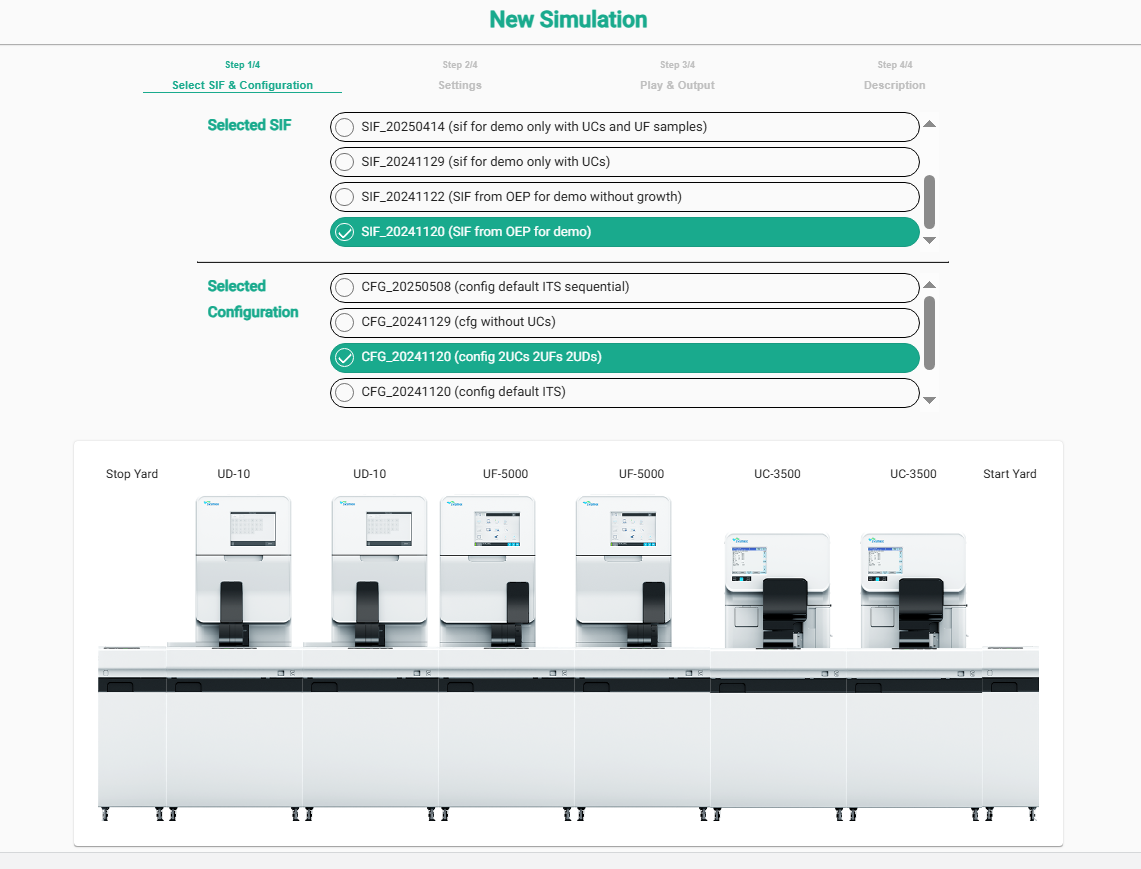
Screenshot: Pathlight New Lab Simulation
EMEA QT
Development started 2024
Quotation Software
Problem solved
Optimize the quotation process for medical procedures, equipment, and operational expenses – used by Sysmex’s commercial teams across Europe.
Tech stack
C#; Visual Studio Professional 2022, Azure DevOps, Angular, JavaScript, Entity Framework, .NET Framework; Microsoft SQL Server
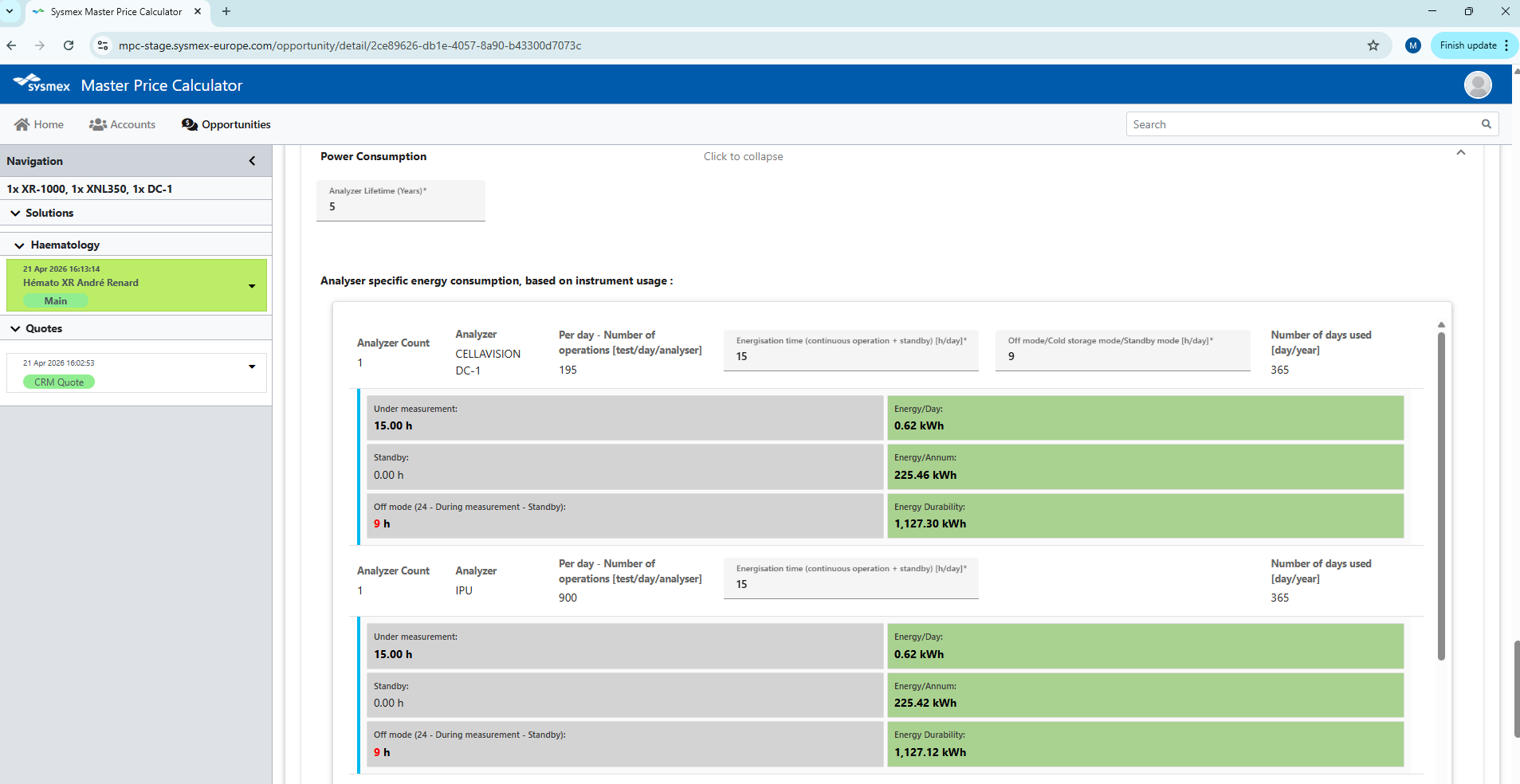
Screenshot: Quotation Tool Master Price Calculator
Partnership Outcomes
25 | 20+ | 40+ |
| years of continuous collaboration – still active | distinct products and applications delivered | RomSoft engineers across the Sysmex portfolio |
The most important outcome isn’t captured in a number. Sysmex Europe went from needing a development company for a single project to having a partner who understands their architecture, their clinical domain, their regulatory environment, and their long-term product direction as well as their own internal teams.
That depth of shared knowledge, built project after project, is what makes the partnership genuinely strategic. Decisions are made faster, and when a new product area opens up, the team starts from what it already knows about Sysmex’s systems and domain instead of starting from zero.
What We Learned
The Sysmex partnership taught us what a development partnership can become when both sides commit to it properly. In the early years, we were proving ourselves – delivering quality, meeting deadlines, learning a domain we didn’t know. Over time we became aware of the customer’s business model and took part in shaping the product’s future alongside the Sysmex team.
| Takeaway When evaluating a development partnership, invests in understanding your partner’s domain, users, and long-term direction. |
Building for regulated environments – where documentation, validation, and quality processes aren’t optional – shaped how we work on every project, not just in healthcare. The discipline required to build medical software well turns out to be the discipline required to build any complex software well.
looking for a partner,not just a vendor?If this story resonates with what you’re looking for – a team that integrates deeply, delivers consistently, and stays for the long haul – we’d like to hear about your project. |